Image Map
Showing posts with label reading. Show all posts

Monday, April 6, 2015

Non-Fiction Text

Before Spring Break we finished up our Non-Fiction text unit. We had quite a bit of fun with this unit of learning and I think the kids really enjoyed learning about non-fiction books and text features. I used a variety of resources during the unit.

We started off comparing a fiction and non-fiction book on our anchor chart. We picked the Rainbow Fish and a Non-Fiction Fish book.

Then we started our Non-Fiction Text Notebooks. The unit I found on TpT came with definition posters to go along with the learning notebook. We explored all of the non-fiction books in my classroom library. Most of the features the students found I would scan for them to add to their notebooks. Some of them they drew and colored.

We used our Scholastic book order to sort fiction and non-fiction books.

After going through all of the notebook, I gave each of the students a non-fiction book and they did a Scavenger Hunt looking for all of the non-fiction text features they had learned about.

As a wrap up and assessment, they each made their non-fiction text posters. It was a a good way for me to see which students understood the features and which did not.

During our minimum days (for parent teacher conferences) the students did research for an animal report and completed their animal reports and clay models. I am really pleased with the way they turned out. This is a simple animal report template from Amy Lemons. The students selected a non-fiction animal book at the library and then wrote about those animals.

I am always amazed at how difficult it is for some of my kiddos to visualize and create a clay model. It's really tough for some of them. We need to practice this skill more often!

But this is one of my favorites. This little guy is an artist and loves to draw.


Monday, February 18, 2013

Reading Assessment

 
For our Reading Assessment I mainly use the Developmental Reading Assessment (DRA).  I like to assess the students at least once every trimester. Sometimes it's more often if the student is suddenly making outstanding progress and their current leveled books are too easy.
 
I've made several copies of each assessment and they are stored in the folders for easy access. This way if I need to go up, or down a level, the copies are already made and ready to go. I like the DRA because it includes a running record as well as a rubric for comprehension. Comprehension is where my students really struggle, so it's nice to have their progress documented by level.
 
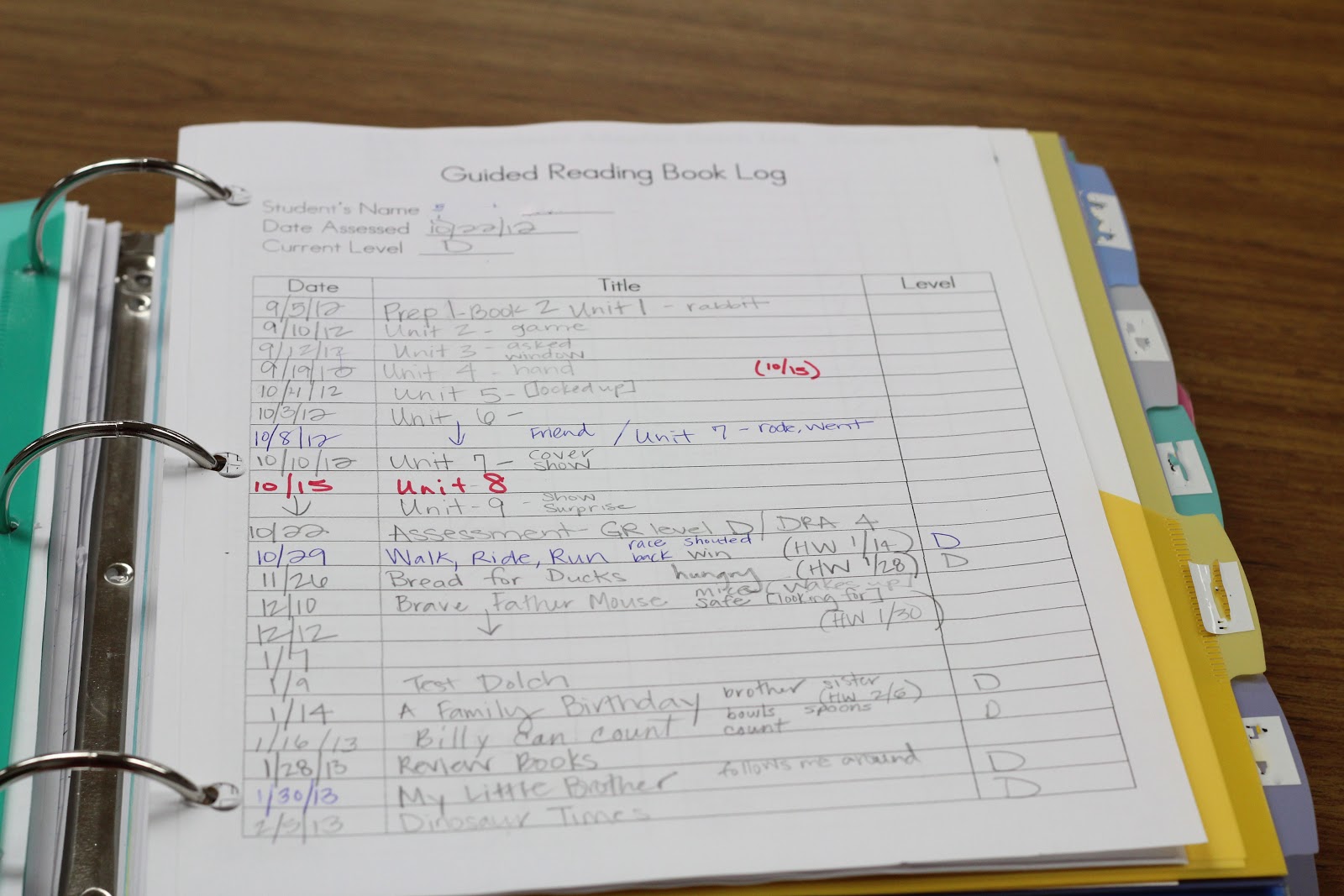
Assessment results are recorded on the student's Guided Reading Log, and their DRA Continuum folders in their Student Portfolios. I like using the DRA Continuum folders because it can keep track of the student's progress all in one place. It's sometimes very slow progress and I want to make sure to really celebrate when progress happens!
 
Occasionally, when a student has read the same DRA assessment more than once I will use the Rigby Benchmark Assessment instead. The comprehension part is not as in-depth, that's why I prefer the DRA.

Sunday, February 17, 2013

Guided Reading

Guided Reading is the rotation that I run during our Fairview Rotation time. I see 13 students Mon-Thurs. The goal is that I see every student two times a week. 
 
When a student comes to me for reading they bring their binder, previously read books from their book boxes, their reading vocabulary box and their homework bag.  Now that we are a few months in, I don't have to give as many reminders on what to bring with them.
 
For Guided Reading I use a variety of sources for reading materials. This is our large Guided Reading  library that we have accumulated over the years. We have leveled readers, fiction and non-fiction in levels A-R. We use the Fountas and Pinnell leveling system. This allows us to level a variety of books in different genres.
 
Something new that I'm using this year is the SRA Multiple Skills Series Reading set. I've had this in the classroom for a while and was using it as additional homework for my higher level students. But one of the things that really struck home at the FV training I went to this summer is that my Guided Reading lessons should be short and sweet, 15-20 minutes (the length of our rotations). I couldn't even begin to wrap my head around how that would work with my level L+ kids. There is no way we could get through a book in a session, let alone hit the target skills necessary for each kid. That's were the Multiple Skills Series comes in.  I can use the higher level books for my higher level readers. We're able to read a 'true' passage and get through all of our skills in one session.  They are not as colorful and entertaining as our other books, but we get in a lot more reading this way. I've also added my own typed questions to go with each unit story for my readers that need additional practice reading and answering questions in a written format.
 
So what does a Guided Reading lesson look like?


  • We quickly read their vocabulary cards from past lessons in their reading vocab boxes. If they know the word, I give them a star on the card. After 5 stars, they have 'mastered' the word and get to trash the card. They love to throw them away! It's a good motivator. 
  • We quickly re-read several of their past books. If they have read the book at least three times with me and they are fluent readers, then I send the book home for reading with their parents. (More on that later.)
  • We start our new reading book.  Many times they are teacher-selected texts. Sometimes I will let the student choose a new book from the appropriate leveled box.
  • We do a picture walk and I pick out new words for the students to locate on the page.
  • We predict what might happen and why.
  • Then we start our reading.
  • As the student reads, I jot down unknown words on their Guided Reading Book Log. (Which I need to redevelop to add more space for the unknown words, and new Bridge phrases.)
  • Occasionally, I will stop the student, cover up the words, and ask them to tell me about the page, looking for conceptually accurate signs and concepts.
  • After the student reads, I mark the Bridge phrases in the book (oh yes I do!) in pencil. For my higher level students that can bridge on their own, after the first read, I ask them to go back and bridge as much as they can on their own. (Bridge Phrases are English phrases requiring American Sign Language (ASL) translation for understanding.)
  • We go back and re-read the passage using the appropriate Bridge phrases and appropriate Adapted Dolch signs.
  • We talk about literary elements such as beginning, middle and end, problem and resolution. I ask for a re-telling of the story in their own words. (For some, this means page by page using the pictures as prompts.)
  • I ask the students to find specific words they didn't know the first time and they write these onto their new reading vocabulary cards. If there is time, they draw a picture on the other side. If there isn't enough time, that is one of the first things they do when they go to the centers rotation.
Usually by now our time is up... and I'm lucky if I made it through all these steps.
 
Reading homework is assigned as often as possible, and at least once a week. The students each have their own homework reading bag. Inside is a parent letter and chart where I fill in the book title and level. When the student takes it home and reads it with their parents, the parent signs off and the student returns the bag the next day.